
How HypoxyLab and GelCount Eliminate Hidden Delays in Modern Cell Biology
In today’s cell biology laboratories, time is rarely lost in dramatic ways. It disappears quietly.
HypoxyLab and GelCount remove routine bottlenecks. Together, they protect experimental continuity, improve reproducibility, and return many hours back to researchers every week.
HypoxyLab – Rapid Setup. Rapid Recovery. Precise Control.
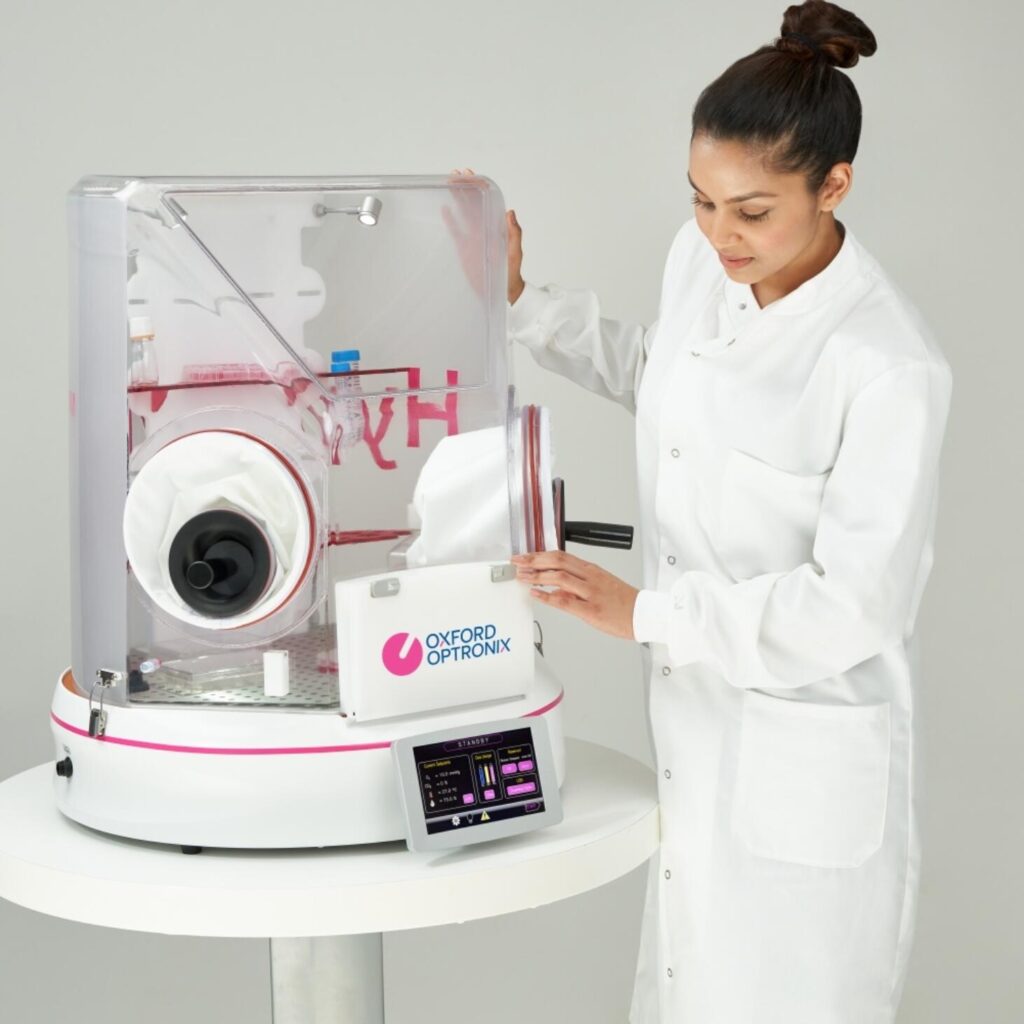
HypoxyLab is engineered to eliminate the extended equilibration times typical of traditional hypoxia chambers.
From switch-on, it achieves a stable, fully humidified, temperature-controlled hypoxic environment (e.g. pO₂ 10 mmHg) in less than 15–20 minutes. Near-anoxic conditions (1–2 mmHg) are achieved in under one hour.
In contrast, conventional hypoxia chambers and incubators may require several hours to stabilise low oxygen conditions — particularly when humidity and temperature must also equilibrate. Opening a standard incubator door can trigger oxygen fluctuations that take up to an hour to correct.
HypoxyLab’s compact chamber volume, automated digital gas control, and advanced MPC algorithm enable:
| Tight oxygen stability (±1 mmHg) | Rapid “pull-down” times | Minimal dead space | Low nitrogen consumption
The Smart Easy-Entry “letterbox” hatch allows plates to be transferred in seconds, causing only ~1.5 mmHg transient disturbance, corrected within approximately 3 minutes — without lengthy airlock purge cycles.
The difference is not incremental. It is operational.
HypoxyLab – Time Savings Under Controlled Oxygen
| Workflow Challenge | Traditional Approach | Efficiencies with HypoxyLab | Multi Savings |
| Initial startup | Several hours to stabilise O₂, temperature & humidity | Fully stabilised hypoxia (e.g. 10 mmHg) in <20 min | Hours saved at start of day |
| Achieving near-anoxia | Slow, unstable transitions | 1–2 mmHg achieved in <1 hour | Faster severe hypoxia studies |
| Plate transfer under hypoxia | Airlock purge or door opening; up to 1 hour re-equilibration | Smart hatch transfer in seconds; ~1.5 mmHg transient corrected in ~3 min | Major reduction in recovery delays |
| Changing oxygen setpoints | Manual purging; overshoot common | MPC-controlled rapid, smooth transitions (±1 mmHg precision) | Faster, reproducible condition shifts |
| Atmospheric variation | %O₂ affected by weather/altitude | Direct partial pressure control (mmHg/kPa) | No recalibration time |
| Gas consumption | Large chambers, high nitrogen usage | Compact chamber with minimal gas consumption | Fewer cylinder changes |
GelCount – Eliminating the Colony Counting Bottleneck
While HypoxyLab protects time under controlled oxygen, GelCount removes delays in colony, spheroid, and organoid analysis.
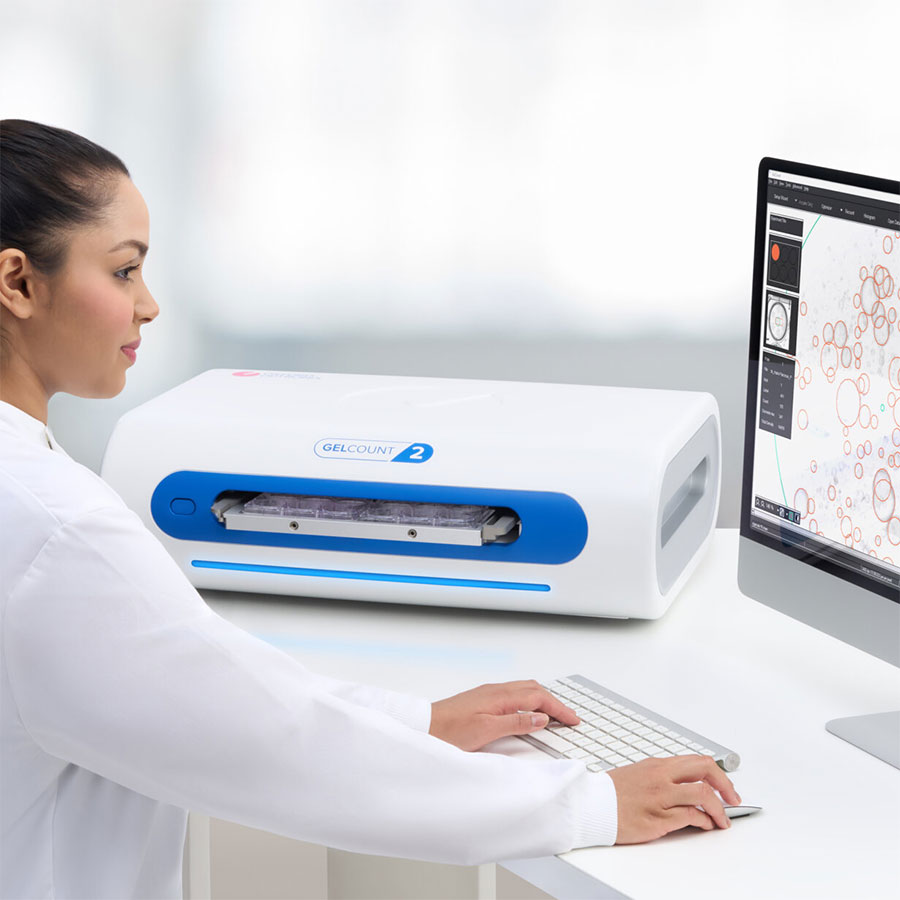
Manual counting can consume hours per experiment. GelCount™ 2 images and processes up to four 6-well plates in under 10 minutes, including automated object detection, diameter statistics, and direct Excel® export.
High depth-of-field, single-pass imaging removes the need for z-stacking, even in 3D matrices up to ~5 mm depth. Objective analysis replaces subjective scoring. Data is export-ready immediately.
Unlimited offline software installations prevent equipment bottlenecks.
GelCount – Time Savings in Colony & Organoid Analysis
| Workflow Challenge | Traditional Approach | Efficiencies With GelCount | Multi Savings |
| Manual colony counting | Hours at microscope | Automated imaging & counting in <10 min | Hours saved per experiment |
| 3D imaging depth | Z-stacking and repeated refocusing | Single-pass high depth-of-field imaging | Faster acquisition |
| Data transcription | Manual spreadsheet entry | Direct Excel® export | Immediate, error-free data |
| Multi-user bottlenecks | Shared microscope queues | Offline analysis on unlimited PCs | Parallel workflows |
GELCOUNT