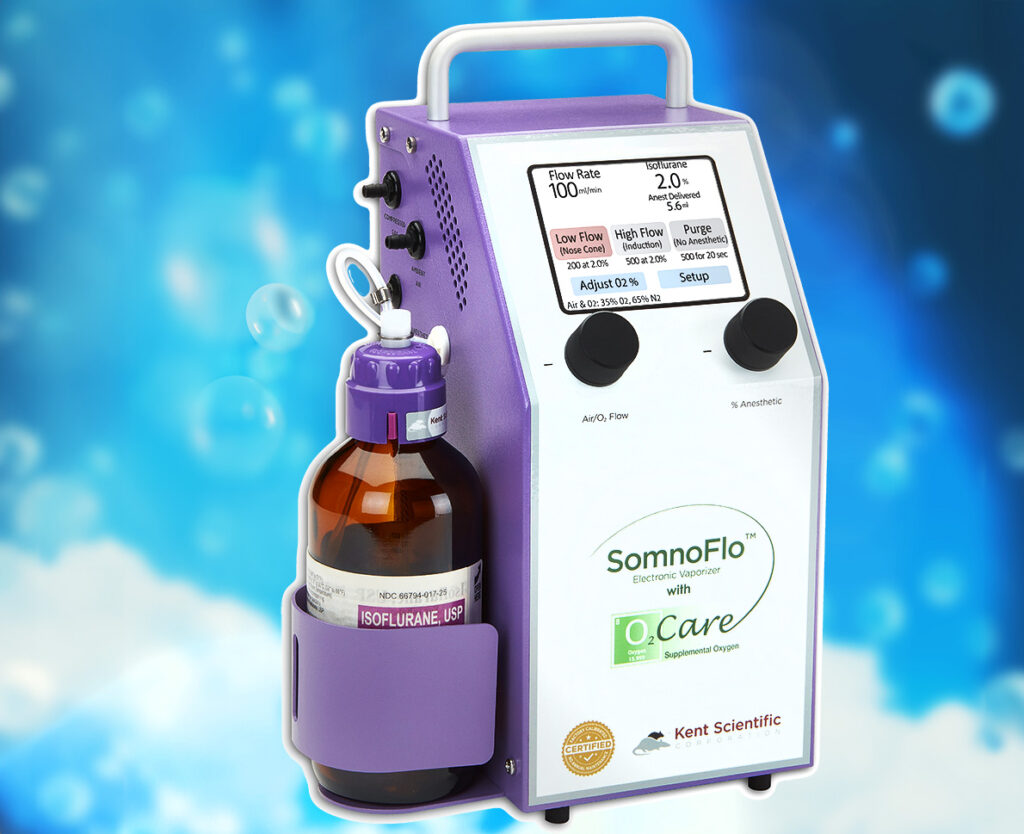
Low flow anaesthesia is changing the way animal facilities approach inhalation anaesthesia. SomnoFlo O₂ Care by Kent Scientific for small animal applications, is significantly reducing oxygen and isoflurane consumption while improving cost efficiency.
A new analysis, “The Economics of Low Flow Anaesthesia,” examines the financial and sustainability benefits of transitioning from traditional vaporizer systems to low-flow anaesthesia using Australian pricing assumptions.
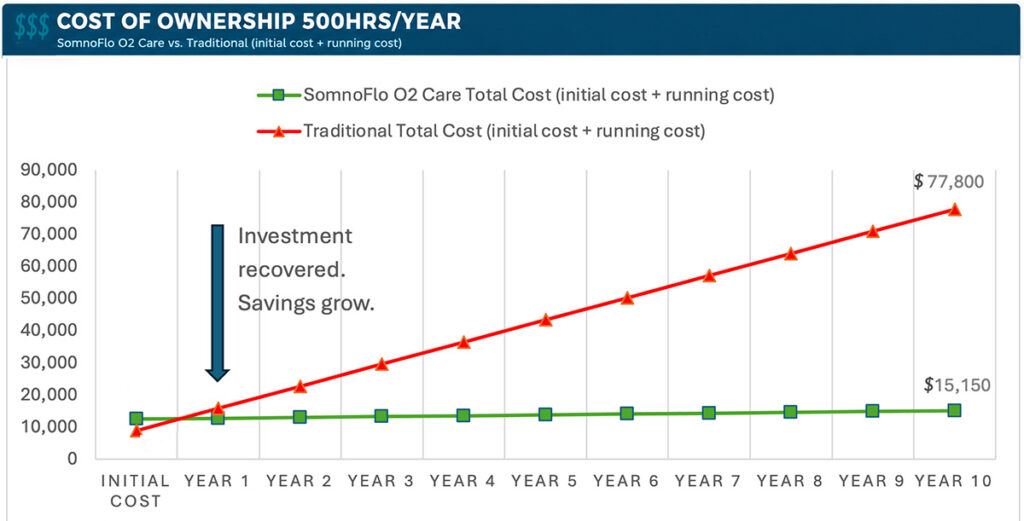
The ongoing costs of oxygen and isoflurane accumulate every time an anaesthesia system is used. At typical usage of 10 hours per week, a traditional system can incur nearly $100,000 in consumable and operating costs over 10 years.
Deliver only what the animal needs
A key difference between traditional and low-flow systems is the amount of isoflurane delivered.
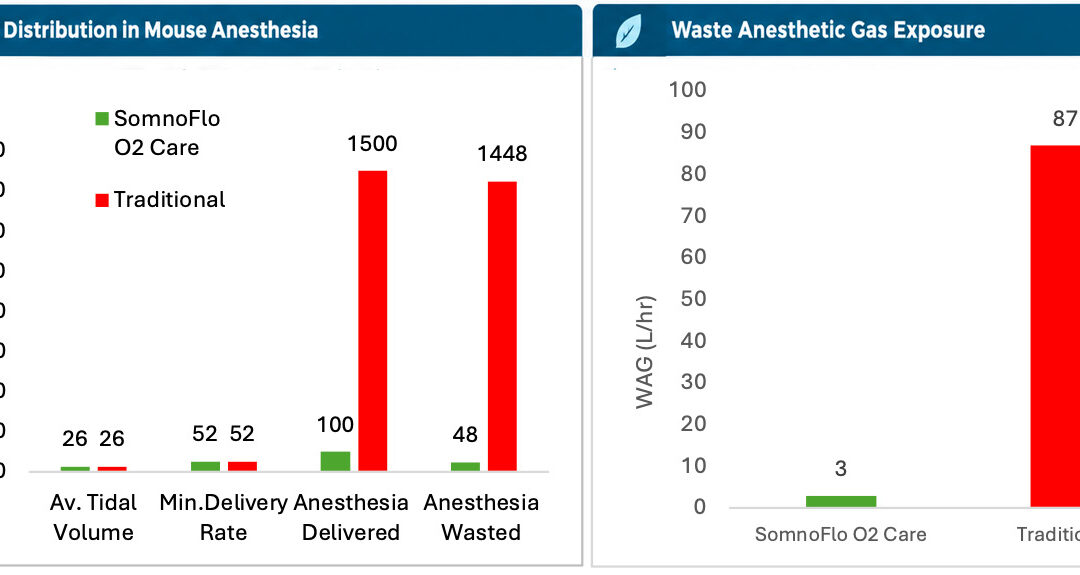
A typical 30 g mouse requires a minute volume of approximately 26 mL/min, while traditional inhalation systems can deliver fresh-gas flows of 1,000–1,500 mL/min or higher. SomnoFlo O2 Care can operate at flows as low as 100 mL/min, substantially reducing the amount of gas and anaesthetic delivered beyond what is required.
Adjustable oxygen concentrations (21% ambient air, 35%, 50%, 70%, and 100%) allow researchers to match oxygen delivery to experimental requirements, improving flexibility while minimizing unnecessary oxygen consumption.
Consumables that last longer
Lower flow rates can translate directly into lower consumption. The paper's analysis shows that a 250 mL bottle of isoflurane can last approximately:
- 417 hours with SomnoFlo O2 Care
- 28 hours with a traditional vaporizer
The analysis, based on Australian costs, estimates hourly running costs for isoflurane and oxygen at $0.53/hour for SomnoFlo O2 Care, compared with $12.76/hour for the traditional system.
What does that mean for the budget?
At 500 hours of use per year, less than 10 hours per week– the analysis estimates annual consumable costs of $265 for SomnoFlo O2 Care versus $6,630 for a traditional vaporizer, representing a potential difference of $6,365 per year. The potential difference becomes particularly significant as equipment usage increases.
Forget calibration costs
Ongoing maintenance is another consideration. Traditional vaporizer calibration and maintenance can cost approximately $250 per year, whereas SomnoFlo's O2 Care digital operation has $0 annual calibration fees and it eliminates the inconvenience of unfamiliar temporary replacement systems or downtime.
Benchtop to Biosphere: Eco-Driven Science
The analysis also identifies potential benefits beyond cost and consumption.
Lower flow rates mean less anaesthetic gas is delivered unnecessarily, which can help reduce waste anaesthetic gas exposure in the laboratory, helping to eliminate isoflurane headaches and assisting positive animal outcomes.
These benefits can be difficult to quantify in dollar terms, but they form part of the broader case for more efficient anaesthesia practices.
Put your own data into the model
The economics of anaesthesia will vary between facilities depending on equipment utilisation, consumable pricing and operating practices. For that reason, we have made the underlying analysis available as a starting point for laboratories to assess their own potential savings or contact us for an individual assessment.